
“Peptides for weight loss” search interest keeps climbing, but the term covers a much wider — and much riskier — range of products than most people realize. Some are rigorously tested prescription medications. Others are unregulated compounds sold online with little oversight and, in at least one documented case, a death temporally associated with use. This guide sorts out which is which, and then focuses on the part that’s actually safe to act on today: how to eat in a way that supports these pathways naturally.
What Are Weight Loss Peptides?
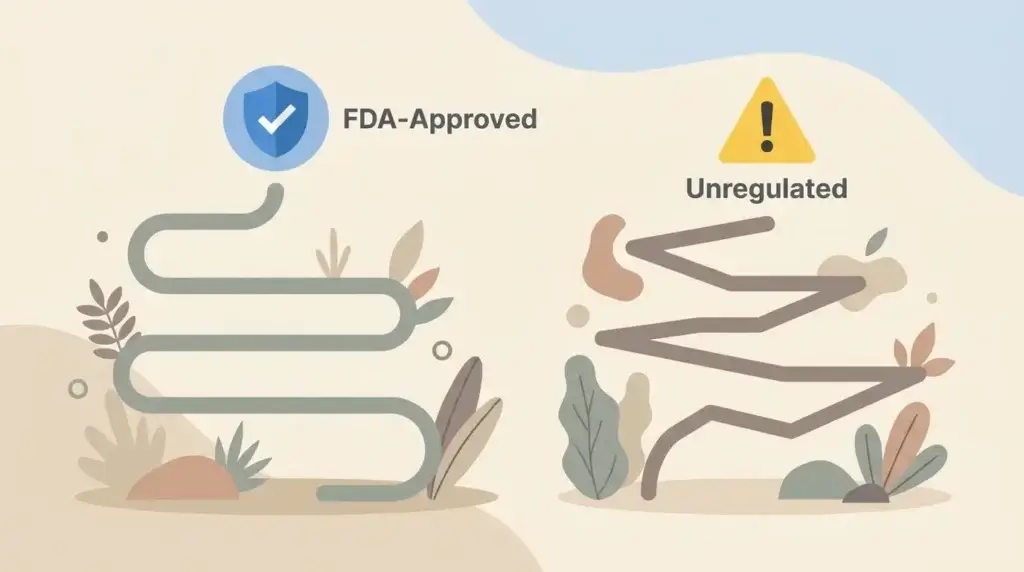
Peptides are short chains of amino acids, and in the weight loss space, they generally fall into two very different categories:
FDA-approved prescription peptides:
- Semaglutide (Wegovy) — a GLP-1 receptor agonist
- Tirzepatide (Zepbound) — a dual GLP-1/GIP agonist
- Liraglutide (Saxenda) — an earlier GLP-1 receptor agonist
These have gone through full clinical trials and regulatory review, and are considered safe when used as prescribed and monitored by a healthcare provider.
Non-prescription “research” peptides:
- Retatrutide — a triple-agonist still in clinical trials, not yet approved (see our full breakdown)
- BPC-157, CJC-1295/Ipamorelin, AOD-9604, MOTS-c, and similar compounds — sold online as “research chemicals,” not approved for weight loss, and not verified for purity, dosing accuracy, or safety in humans
That second category is where real caution is warranted. The FDA has specifically flagged compounds like CJC-1295 as potentially dangerous, with at least one death temporally associated with its use — this doesn’t prove cause and effect, but it’s a serious enough signal that “available online” should never be mistaken for “safe.”
Common Side Effects Across This Category
Even the approved, medically supervised peptides come with real side effects worth knowing:
- Common: nausea, vomiting, abdominal discomfort, constipation, diarrhea — generally dose-dependent and often easing over several weeks
- Less common but serious: pancreatitis, gallbladder issues, and a thyroid tumor warning based on animal studies (not observed in humans to date)
Unregulated research peptides carry all of the same theoretical risks, plus the added uncertainty of not knowing exactly what’s in the product or at what dose.
What to Eat If You’re on (or Considering) a Peptide-Based Approach
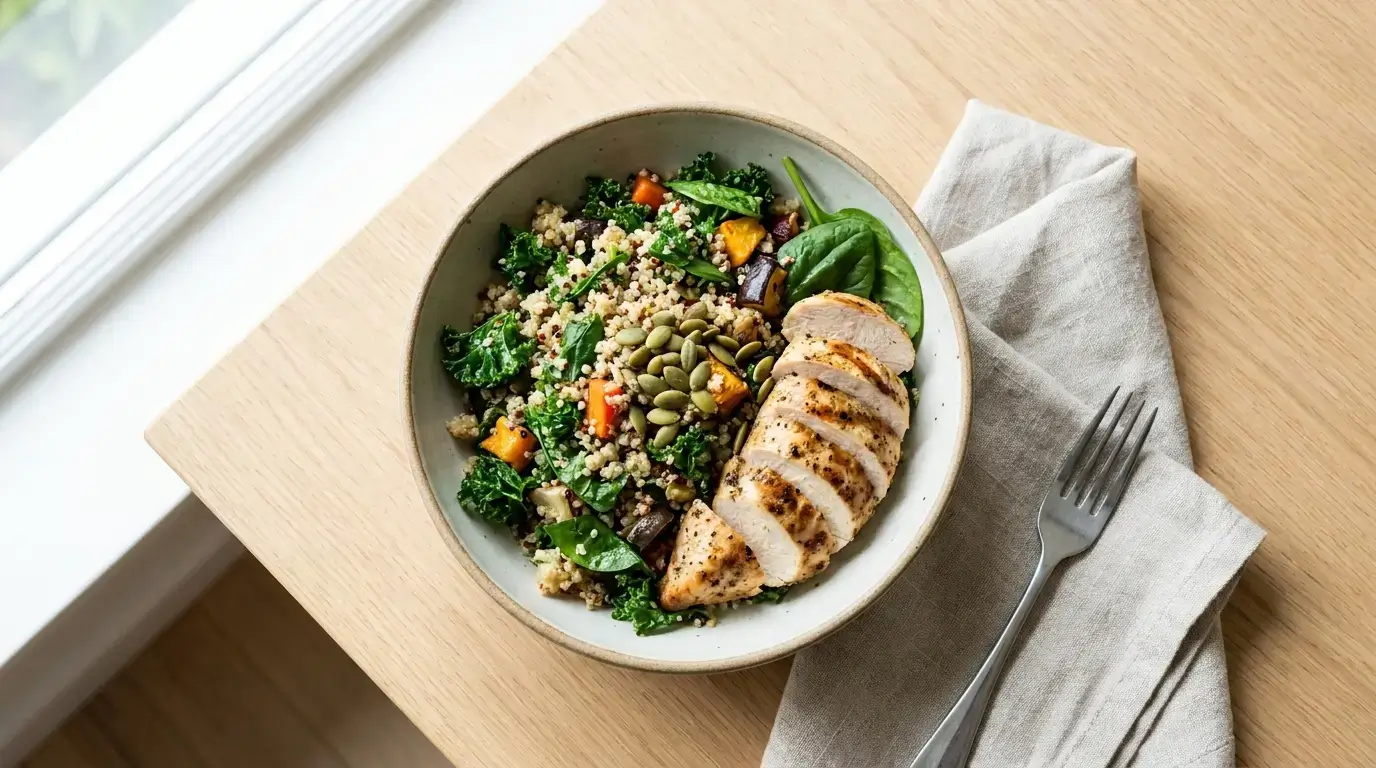
This is the part within your control regardless of which category you’re looking at, and it applies whether you’re on an approved prescription, waiting on something like retatrutide to reach approval, or simply supporting your body’s natural peptide activity through food.
1. Prioritize Protein to Protect Muscle Mass
Appetite suppression from any of these compounds means eating less overall, which puts muscle mass at risk if protein intake isn’t deliberate. Start with high-protein oatmeal or a savory, no-sugar breakfast, and keep high-protein snacks under 200 calories accessible for lower-appetite days.
2. Manage GI Side Effects Through Food Choices

Since nausea and digestive upset are the most common complaint across this entire category, smaller, more frequent, lower-fat meals tend to sit better than large or heavy ones. Our tirzepatide meal plan was built specifically around this need and works just as well for anyone managing appetite changes from any GLP-1-type approach.
3. Use Fiber to Support Fullness Naturally
Soluble fiber mechanically supports the same fullness signal these peptides target hormonally. Psyllium husk and glucomannan are well-studied starting points, and pairing fiber with protein tends to extend satiety further than either alone.
4. Lean on Whole-Food GLP-1 Support First

If you’d rather not go the prescription or research-peptide route at all, our full natural GLP-1 foods list covers what to build meals around, and a GLP-1 smoothie recipe is one of the simplest ways to start today, with none of the regulatory uncertainty of the research peptide category.
5. Stay Hydrated
Reduced appetite plus higher fiber intake both raise the risk of constipation if water intake doesn’t increase alongside them.
If You’re Considering the Prescription Route
Approved peptides (semaglutide, tirzepatide) are available today through licensed telehealth providers — we’ve covered what that process actually looks like in our Medvi and Embody reviews. If a non-prescription supplement approach fits better, our best GLP-1 supplement guide breaks down that category honestly.
What to Avoid
However appealing the price or promised results, avoid purchasing “research peptides” like BPC-157, CJC-1295, or similar compounds from online sellers with no medical oversight. Without regulatory testing, there’s no reliable way to confirm what’s actually in the product, at what concentration, or whether it’s been handled and stored properly.
FAQ
Are peptides for weight loss safe?
FDA-approved options (semaglutide, tirzepatide, liraglutide) are considered safe when prescribed and monitored by a healthcare provider. Non-prescription “research” peptides sold online are not regulated, not verified for safety or purity, and carry meaningfully higher risk.
What’s the difference between peptides and GLP-1 medications?
GLP-1 medications like semaglutide and tirzepatide are a specific type of peptide. “Peptides for weight loss” is a broader category that also includes unregulated compounds with far less evidence and oversight behind them.
Can food alone do what weight loss peptides do?
No, not to the same degree — but whole foods rich in protein and fiber support the same general appetite and fullness pathways, with none of the risk profile of unregulated compounds.
What should I eat if I’m dealing with nausea from a GLP-1 medication?
Smaller, more frequent meals, lower in fat, with a focus on protein — see our tirzepatide meal plan for a full framework built around exactly this.
This article is for informational purposes only and is not medical advice. Never purchase unregulated “research chemical” peptides for personal use. Talk to a licensed healthcare provider about weight loss treatment options that are appropriate and safe for you.