
The gelatin trick has taken over wellness feeds in 2026 — but if you’re vegan, vegetarian, or simply avoiding animal products, standard gelatin is off the table. That’s where agar agar comes in.
Agar agar is a plant-based gelling agent derived from red seaweed. It works through the same core mechanism as gelatin: it expands in your stomach, creates physical volume, and helps you feel full before meals without adding meaningful calories. No animal products. No compromise on results.
If you’re avoiding gelatin for dietary reasons, see which foods contain gelatin — and why agar agar is the plant-based alternative.
This guide walks you through the exact agar agar weight loss recipe, three flavor variations, when to use it, and what to realistically expect.
What Is Agar Agar and Why Does It Work for Weight Loss?
Agar agar (also called kanten in Japan) is extracted from red algae, specifically Gelidium and Gracilaria species. It has been used in Asian cuisines for centuries — as a dessert base, a thickener, and a traditional health ingredient.
For weight loss, what matters is its fiber profile. Agar agar is made almost entirely of soluble and insoluble dietary fiber. It contains virtually no calories, no fat, and no digestible carbohydrates.
When you consume agar agar dissolved in liquid:
- It absorbs water and swells in the stomach
- It slows gastric emptying — food moves through your digestive system more gradually
- It activates stretch receptors in the stomach wall, which signal fullness to the brain
- It helps stabilize blood sugar by slowing glucose absorption
The result is a genuine reduction in appetite before meals — not from protein or hormones, but from physical volume and fiber-driven satiety. It is a different mechanism than gelatin, but the practical outcome is similar: you eat less at your next meal without feeling deprived.
For a direct comparison of how agar agar and gelatin differ in terms of weight loss, see: Agar Agar vs Gelatin: Key Differences & When to Use Each
Agar Agar vs Gelatin for Weight Loss: The Key Difference
Before getting into the recipe, it’s worth being clear on one important point.
Gelatin works through two mechanisms: physical volume in the stomach AND protein-driven satiety (including potential GLP-1 support from its glycine content). Agar agar works primarily through fiber-based volume. It does not provide meaningful protein, so the hormonal satiety effect of gelatin is not replicated.
What agar agar does deliver:
- Near-zero calories per serving
- Strong fiber-driven fullness
- Slower digestion and blood sugar stabilization
- 100% vegan and plant-based
What it does not deliver compared to gelatin:
- Protein (gelatin has ~6g per tablespoon; agar has ~0g)
- Direct GLP-1 stimulation via amino acids
Bottom line: for vegans and vegetarians, agar agar is the best available alternative. For omnivores, gelatin has a slight edge for appetite control. Either way, the pre-meal habit itself — consuming something that creates stomach volume before eating — is the real behavior change that drives results.
For a full breakdown: Gelatin vs Collagen for Weight Loss: Which Controls Hunger?
The Basic Agar Agar Weight Loss Recipe
This is the simplest, most effective version. Three ingredients, five minutes, and it works whether you drink it warm or eat it chilled as cubes.

Ingredients (1 serving)
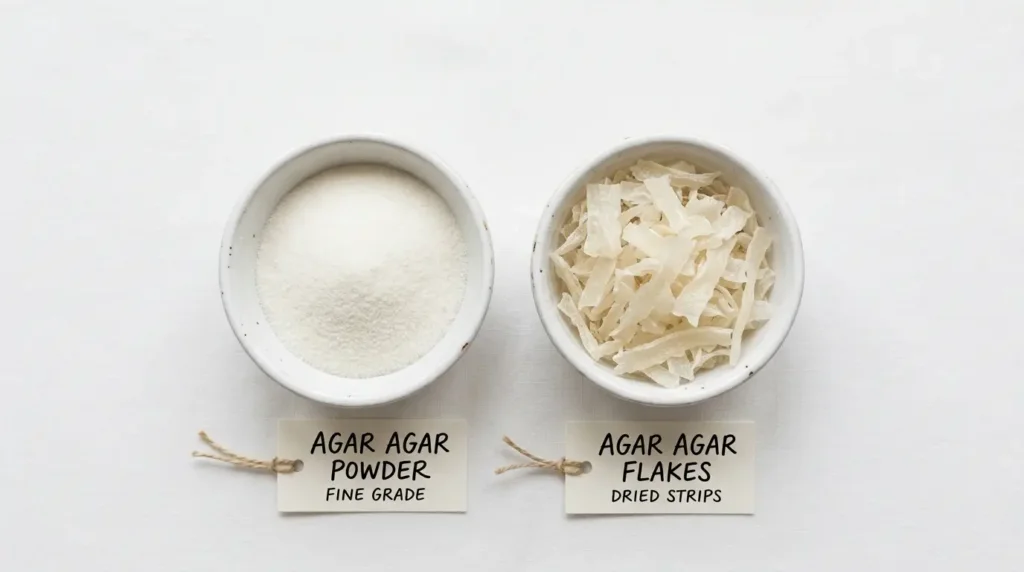
- 1 teaspoon agar agar powder (not flakes — powder dissolves more reliably)
- 1 cup (240ml) hot water or unsweetened herbal tea
- Optional: squeeze of lemon juice, pinch of stevia or erythritol to taste
Instructions
- Bring the water or tea to a boil in a small saucepan.
- Sprinkle the agar agar powder over the hot liquid while whisking constantly.
- Continue stirring and boiling for 2 minutes until fully dissolved — there should be no visible granules.
- Remove from heat. Add lemon juice and sweetener if using.
- Option A — Drink warm: Pour into a glass and drink immediately, 15–20 minutes before your meal.
- Option B — Eat as cubes: Pour into a small container or silicone mold, let cool to room temperature, then refrigerate for 1–2 hours until set. Eat the cubes 15–20 minutes before your meal.
Nutrition per serving (plain version)
- Calories: ~5
- Protein: 0g
- Fiber: ~2–3g
- Carbohydrates: ~0g net
Important notes
- Always use powder, not flakes. Flakes require more volume and dissolve unevenly.
- Do not swallow dry agar agar powder — it expands rapidly and can cause choking.
- Always dissolve fully in boiling liquid — agar agar does not activate in cold or warm water.
- Drink plenty of water throughout the day when adding agar to your routine.
3 Flavor Variations

1. Pink Agar Agar Recipe
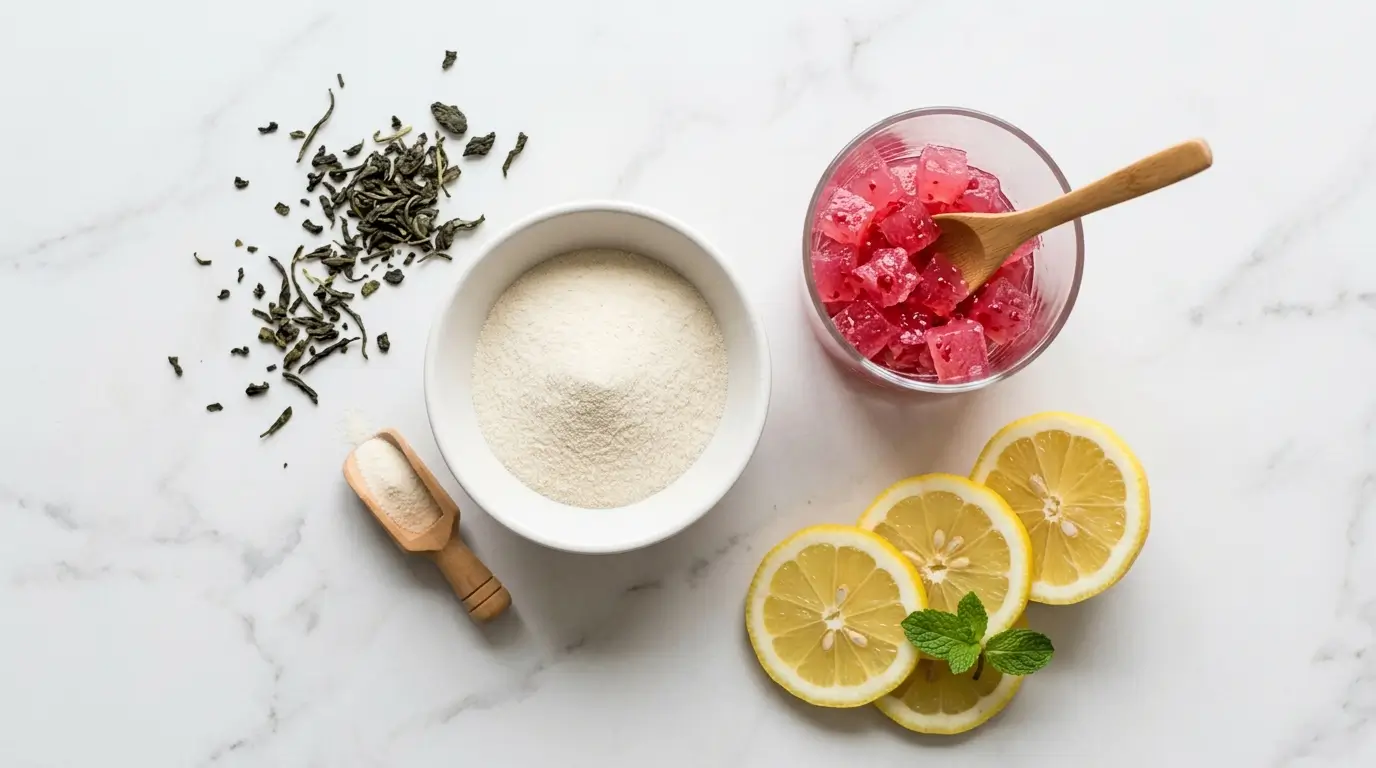
Replace half the water with unsweetened cranberry or pomegranate juice. This adds a light tartness and antioxidants without significant sugar. The color is naturally deep pink — visually satisfying and easy to stick to as a daily habit.
Ingredients:
- ½ cup boiling water
- ½ cup unsweetened cranberry juice (heated)
- 1 tsp agar agar powder
- Stevia to taste
Dissolve the agar in the boiling water first, then combine with the warm juice. Pour into molds and refrigerate.
2. Green Tea Agar Agar Recipe
Brew 1 cup of strong green tea, then use it as your liquid base. Green tea adds a mild metabolic-supporting effect from its EGCG content and pairs well with a squeeze of lemon. This is the closest vegan parallel to the “green tea gelatin trick” popular in wellness circles.
Ingredients:
- 1 cup strong brewed green tea (hot)
- 1 tsp agar agar powder
- Squeeze of lemon juice
- Stevia or honey to taste
3. Ginger Lemon Agar Agar Recipe
This variation is the most flavorful and adds ginger’s natural digestive benefits. Brew 1 cup of ginger tea or add ½ teaspoon of fresh grated ginger to the boiling water before adding the agar.
Ingredients:
- 1 cup boiling water or ginger tea
- 1 tsp agar agar powder
- Juice of ½ lemon
- Pinch of cayenne pepper (optional)
- Stevia to taste
This version works especially well as a warm pre-meal drink in winter months.
How to Use Agar Agar for Weight Loss: Timing and Frequency
When to take it: 15–20 minutes before your largest meal of the day. This gives the agar time to partially expand in your stomach before food arrives, reinforcing early fullness signals.
How often: Once daily is sufficient for most people. If you find one daily habit manageable, you can extend to twice daily (before lunch and dinner) after one week.
How long before you see results: Most people notice reduced appetite at the meal that follows within the first few days. Changes in body weight, if any, take several weeks and depend on your overall diet.
Starting dose: Begin with ½ teaspoon of powder per day for the first three days if you are sensitive to high-fiber foods. This helps your digestive system adjust and reduces the risk of bloating.
Who Should Avoid Agar Agar
Agar agar is generally safe, but it is not appropriate for everyone:
- People with swallowing difficulties should not use agar agar in any dry or partially dissolved form.
- Those with digestive conditions such as IBS or Crohn’s disease should consult a doctor before adding high-fiber supplements.
- Children and adolescents — a daily appetite-suppression habit is not appropriate for developing bodies.
- Pregnant or breastfeeding women — consult your healthcare provider first.
FAQs
Is agar agar good for weight loss?
Agar agar can support weight loss by creating physical fullness in the stomach before meals, which helps reduce overall calorie intake. It is high in dietary fiber, nearly calorie-free, and slows gastric emptying. It works best as part of a balanced diet rather than as a standalone solution.
Can agar agar replace gelatin for weight loss?
Partially. Agar agar replicates the volume-based satiety effect of gelatin but does not provide the protein or amino acids (such as glycine) that may support GLP-1 activity in gelatin. For vegans and vegetarians, agar agar is the best available alternative.
How much agar agar per day for weight loss?
Start with 1 teaspoon (approximately 2–3g) of agar agar powder per day, dissolved in 1 cup of hot liquid. This is sufficient to create meaningful stomach volume. Do not exceed 5g per day without medical guidance.
Does agar agar suppress appetite?
Yes, through a fiber-based mechanism. When agar agar absorbs liquid, it expands and occupies space in the stomach. This stretches the stomach wall and sends fullness signals to the brain, reducing hunger before and during meals.
Is agar agar keto-friendly?
Mostly yes. Agar agar contains very few net carbohydrates since most of its carbohydrate content comes from non-digestible fiber. However, confirm with your specific keto targets, as some versions flavored with juice may add carbs.
What is the difference between agar agar powder and flakes?
Powder is more concentrated and dissolves more reliably. Use 1 teaspoon of powder where a recipe calls for 1 tablespoon of flakes. For weight loss recipes, always use powder for consistent results.
Does agar agar have any side effects?
At normal doses, agar agar is well tolerated. Some people experience mild bloating or gas when first introducing it, especially if their diet is currently low in fiber. Starting with a smaller dose (½ teaspoon) and drinking plenty of water helps minimize these effects.
Conclusion
Agar agar is the most practical vegan alternative to the gelatin weight loss trick. It works, it’s cheap, it’s plant-based, and the recipe takes under five minutes to prepare.
It won’t replicate every benefit of gelatin — the protein content is negligible, and the GLP-1 connection is weaker. But for anyone avoiding animal products, it provides the same core benefit that makes the gelatin trick useful: physical fullness before meals, with almost no calories.
Start with the basic recipe once daily before your largest meal. Give it two weeks. Pair it with balanced meals and consistent habits — and use it as a tool, not a shortcut.
Disclaimer: This article is for informational purposes only and does not constitute medical advice. Consult your healthcare provider before making changes to your diet, especially if you have a health condition or take medication.